SALVARE
Mars ISRU · NASA RASC-AL 2022
Self-Acquisition of Liquid propellant: a Versatile Arsenal of Resources Endeavour
SALVARE is a mission to make rocket propellant on Mars. Twenty-nine students from Politecnico di Milano and Embry-Riddle Aeronautical University designed it for NASA RASC-AL 2022, and it reached the finals among about 150 teams.
With today's technology and budgets, carrying the fuel for a round trip to Mars is unlikely, so the first crew's return vehicle has to be fuelled with what Mars already has. SALVARE applies In-Situ Resource Utilisation: it draws water from ice pockets beneath the surface and carbon dioxide from the atmosphere, and turns them into liquid methane and liquid oxygen, 50 tonnes of propellant a year.
How it works
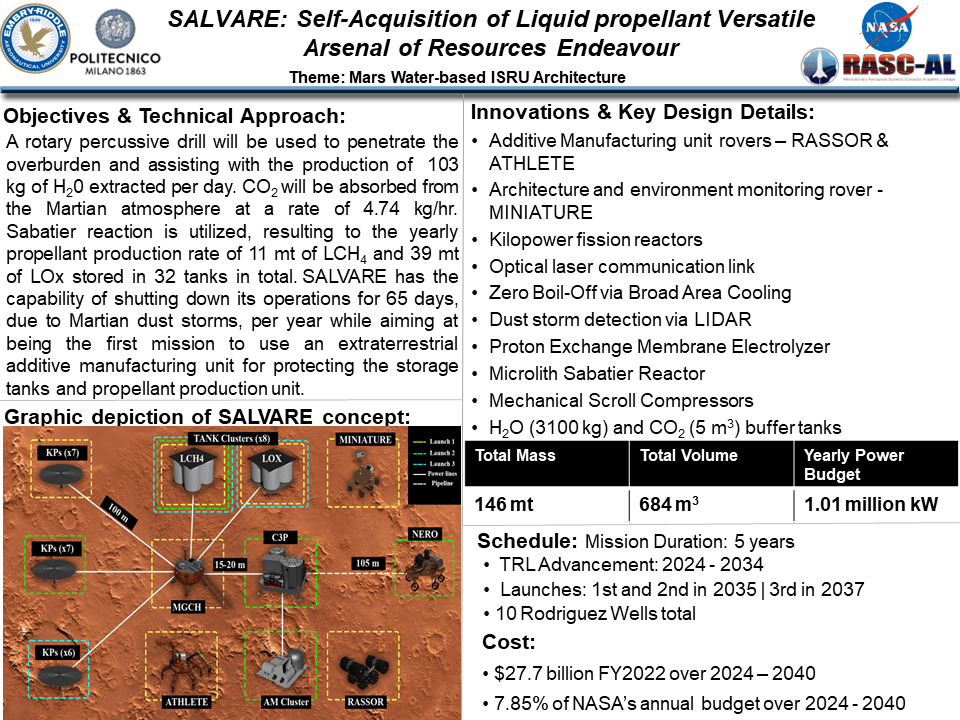
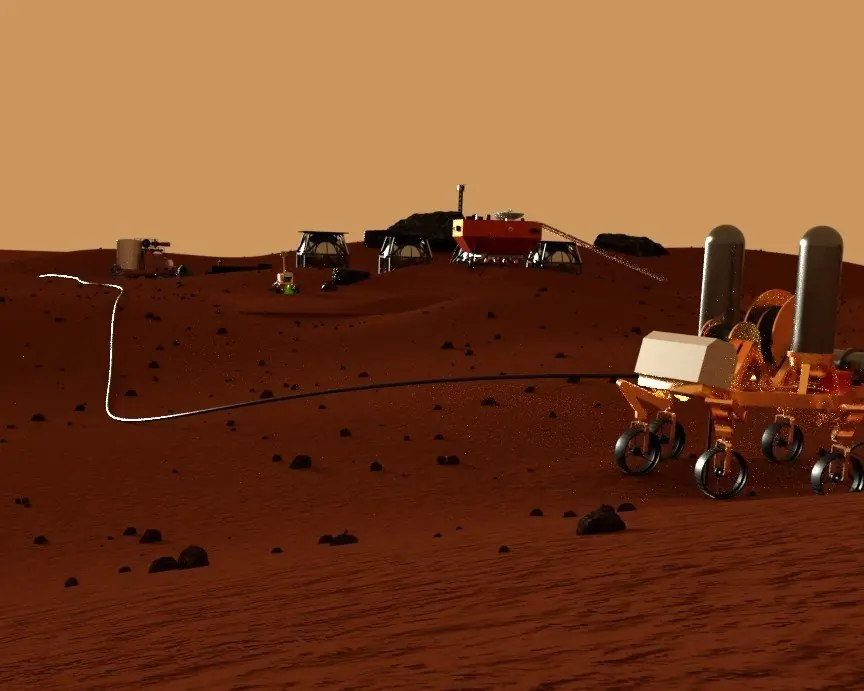
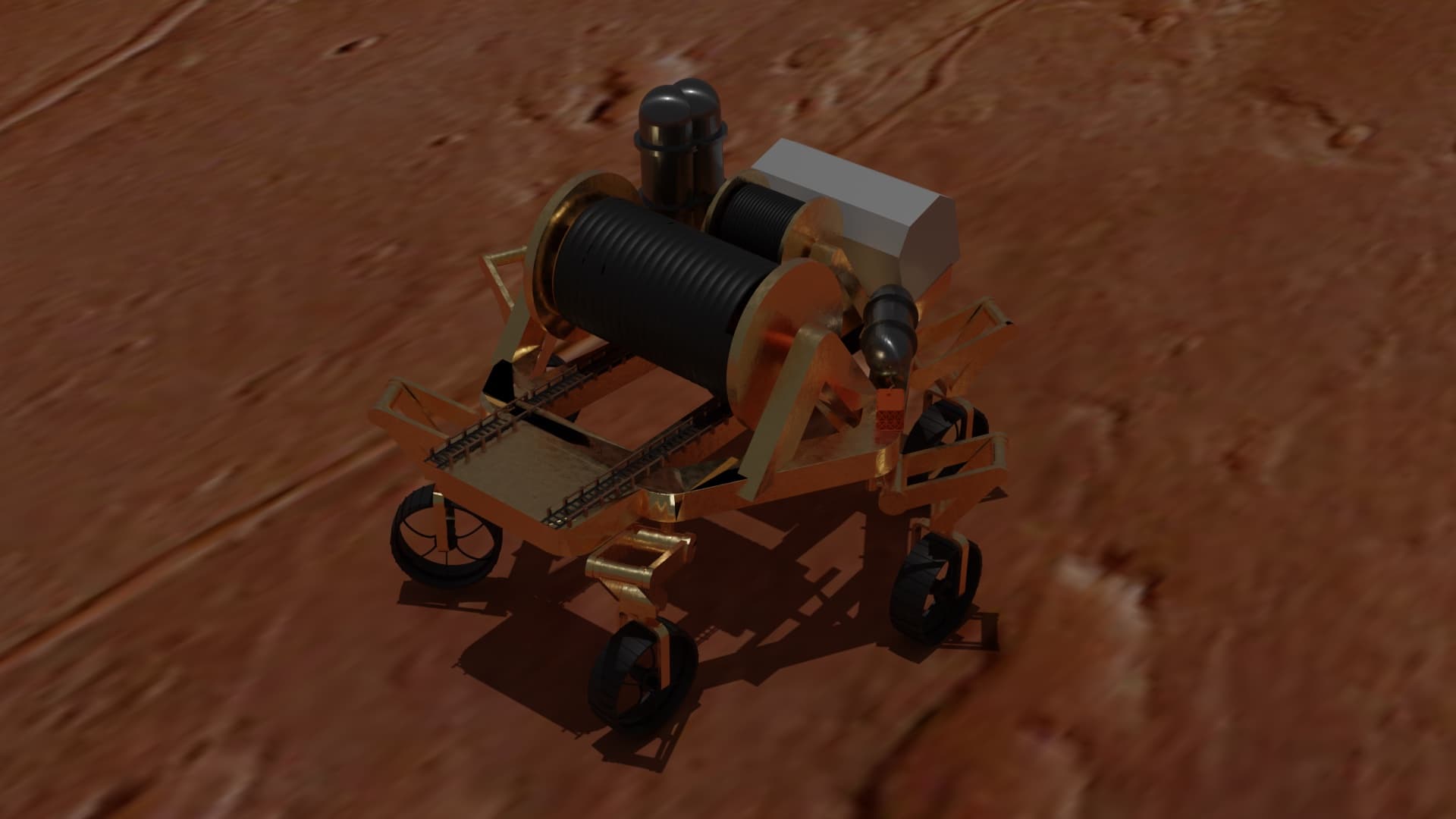
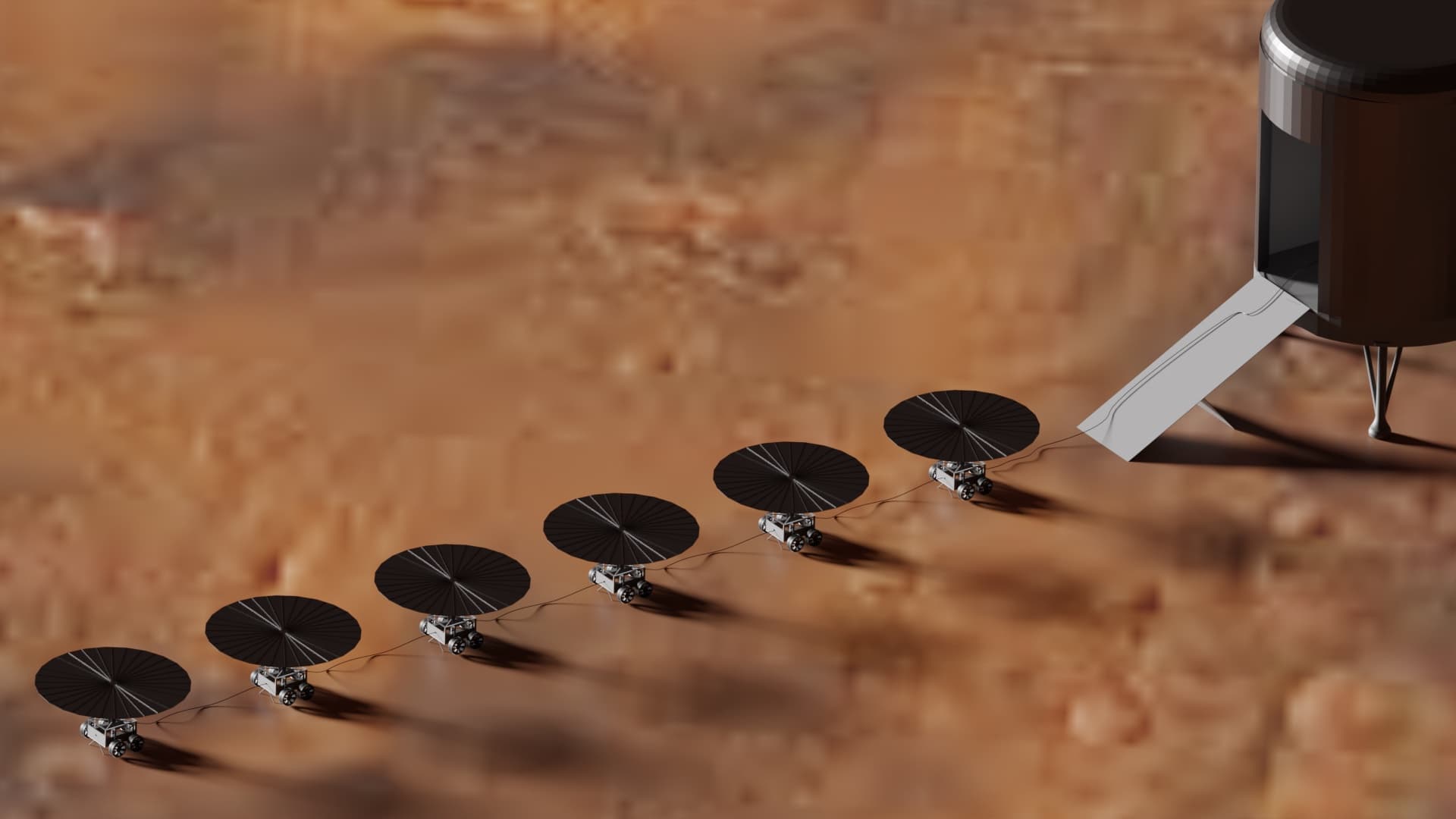
Three launches bring the base to the surface from 2035, and from 2037 it runs on its own, day and night, for at least five years. A rover, NERO, drills into an ice pocket and melts it into an underground pool, a Rodriguez well. An insulated pipeline 105 metres long, wound on a reel, carries the water to the plant, and when a pool runs dry NERO moves on to the next. Twenty Kilopower fission reactors power the base, unrolled from their lander one cart after another, like a train. Another rover maps the ground beneath with radar, and two more print a shell of Martian concrete over the storage tanks, against radiation.
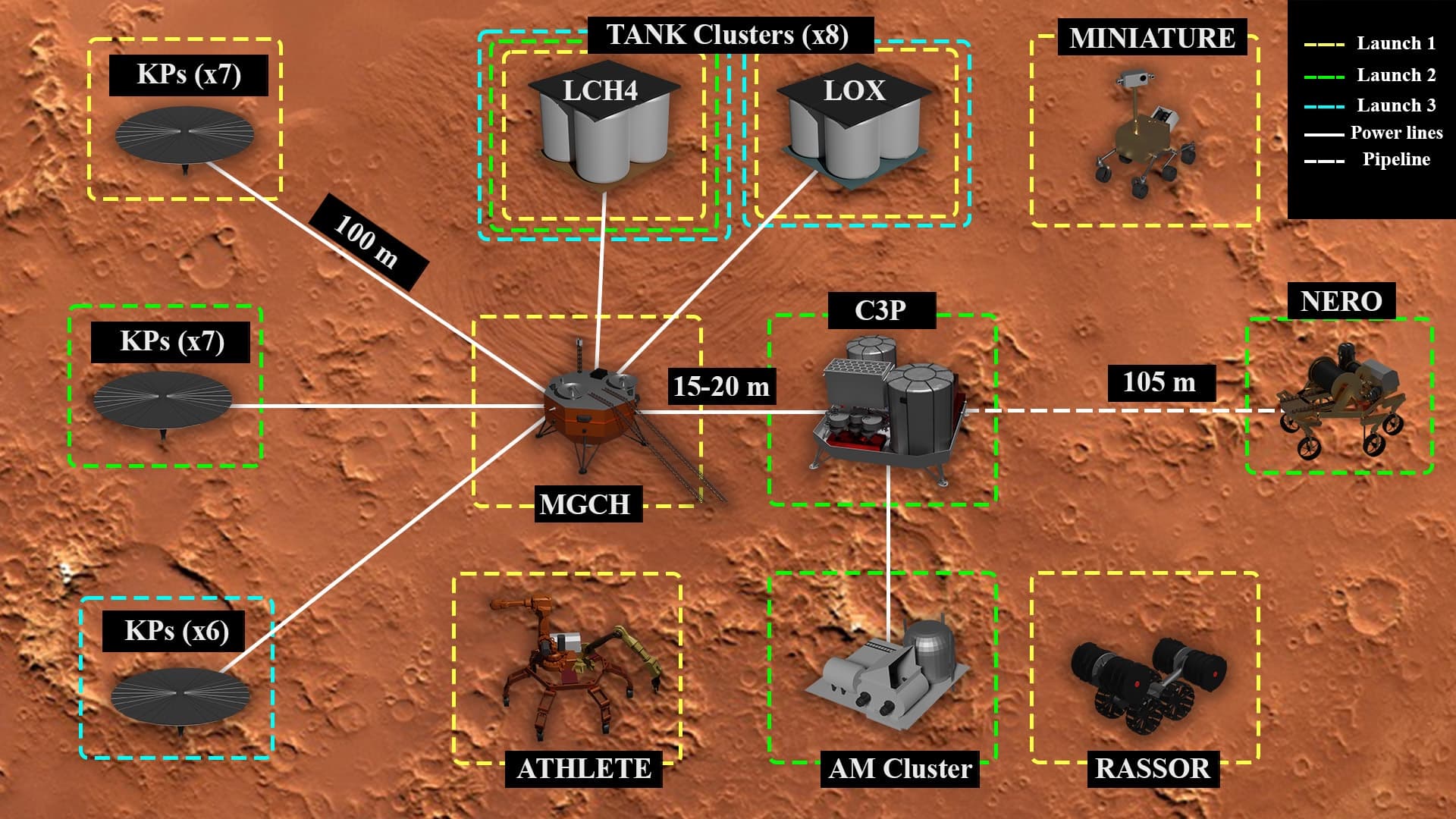
The plant is sized to make its 50 tonnes in 300 days, so it can stop for 65 days a year when dust storms come. Its estimated mass on Mars is 145.6 tonnes, and the mission was costed at 27.7 billion dollars from 2024.
Making the propellant
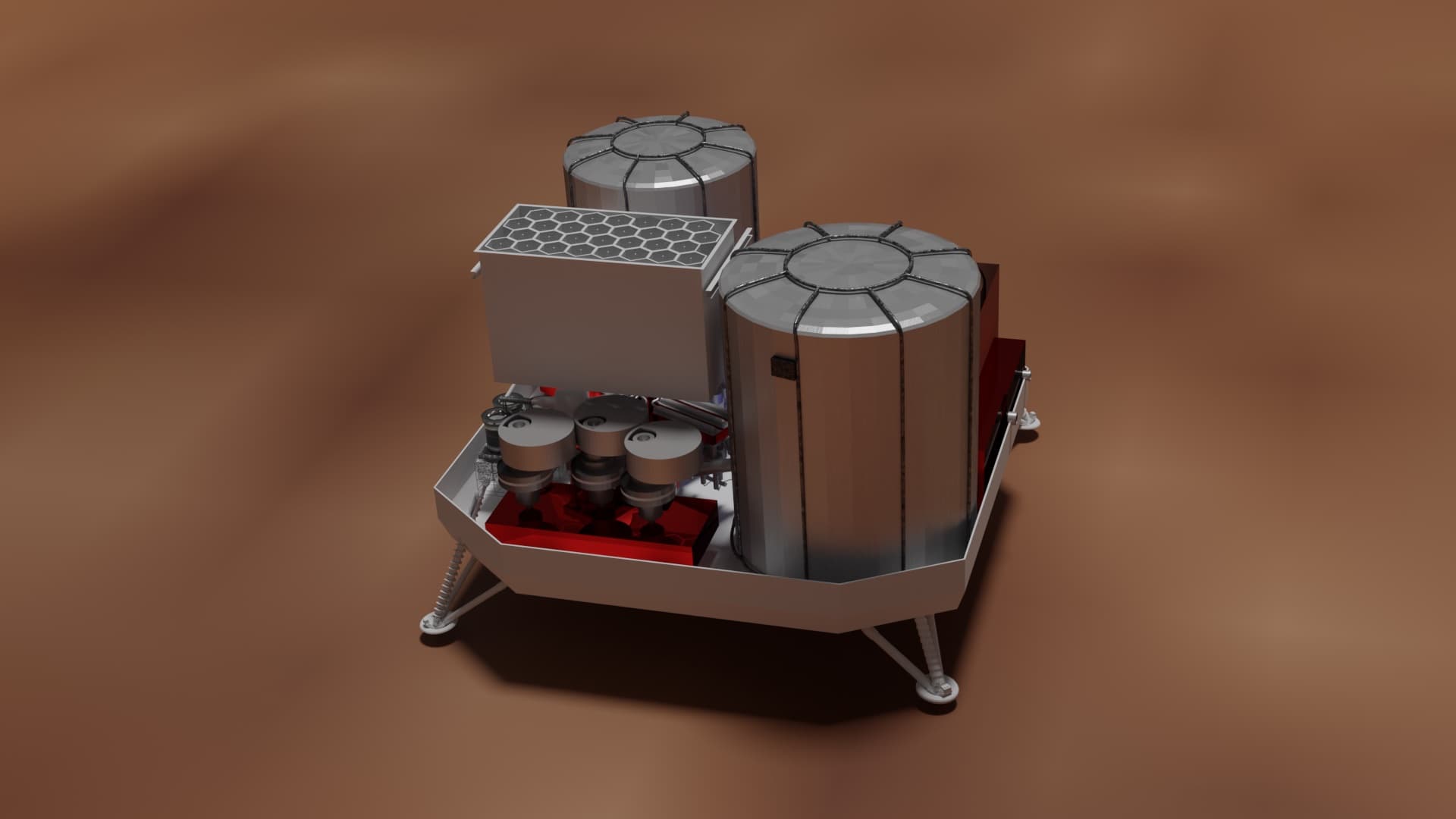
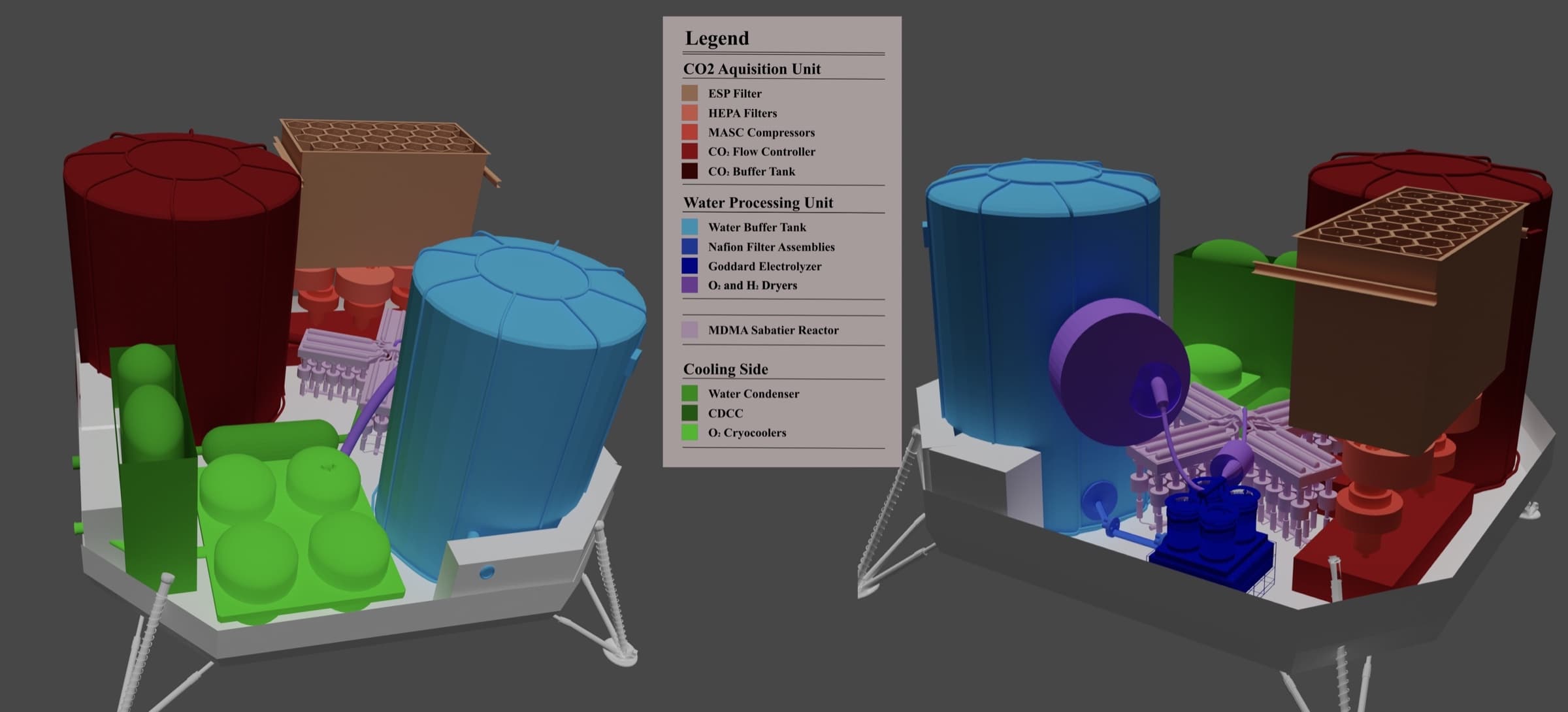
I led the propellant production sub-team, which designed C3P, the lander where the chemistry happens. Martian air is cleaned of dust and compressed, and its carbon dioxide meets hydrogen in 60 small Sabatier reactors, 32 always running and 28 kept in reserve, to become methane and water. That water, together with the water from the wells, is split by electrolysis into the hydrogen the reactors need and the oxygen the engines burn. The dust and water filters are changed by a revolver mechanism, so the plant can keep going for years with nobody there.
- Launches
- 3, from 2035
- Operations
- From 2037, at least 5 years
- Propellant
- 50 t a year of liquid methane and oxygen
- Mass on Mars
- 145.6 t
- Estimated cost
- $27.7 billion
- Team
- 29 students, Politecnico di Milano and Embry-Riddle
- Advisors
- Davide Conte, Claudia Ehringer Lucas, Michèle Lavagna
- My role
- Propellant production sub-team lead, VR prototype
Virtual Reality Prototype
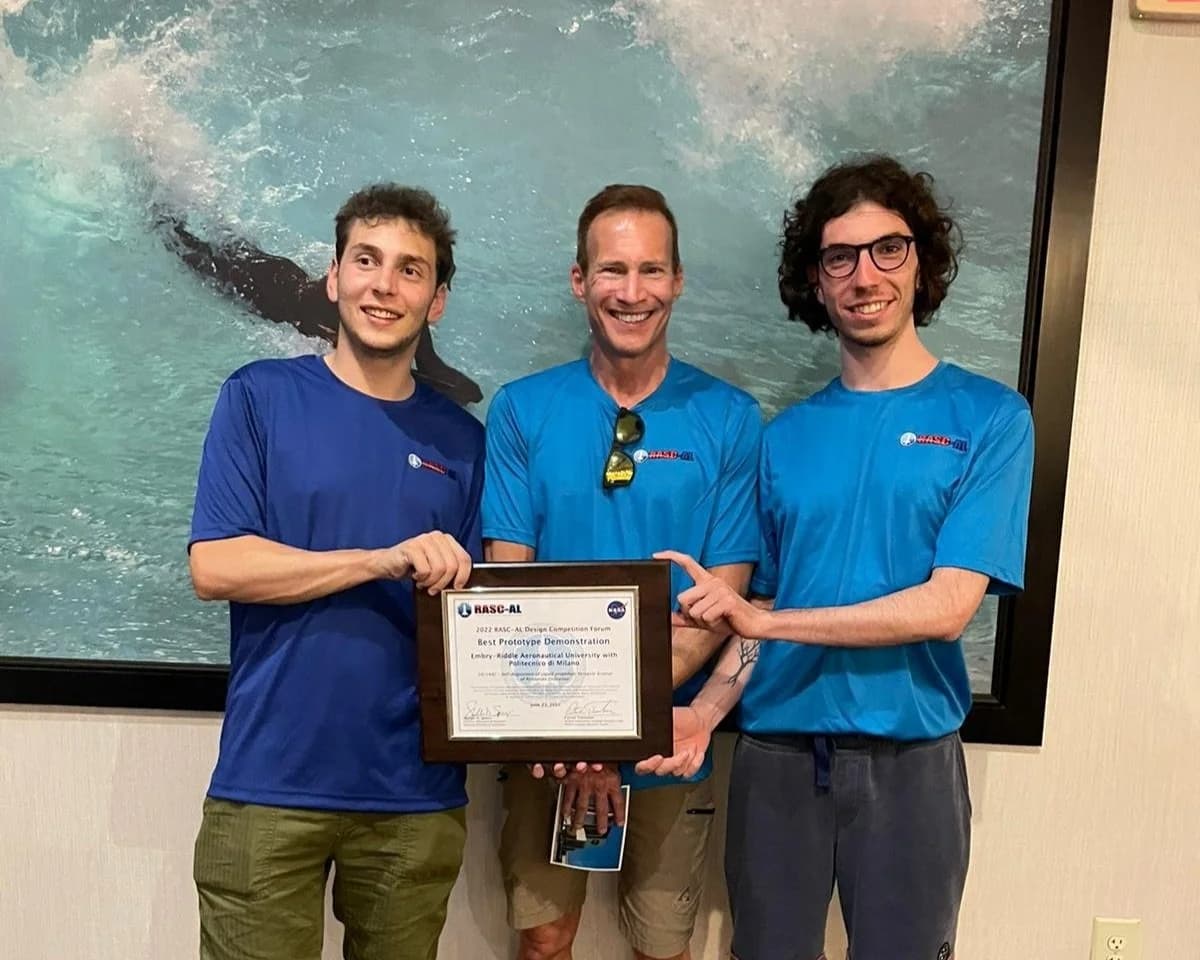
With Giuseppe Edoardo Addario I built an interactive virtual reality prototype of the mission, so that the jury could walk through its operations on the Martian surface. At the finals in Cocoa Beach, in June 2022, it was awarded Best Prototype Demonstration.